For Indian job seekers, the phrase “visa sponsorship” is the single most important line in any UAE job advertisement. It means the employer will arrange your work permit and UAE residence visa for you — the legal foundation that allows you to live and work in the Emirates. You cannot legally take up a salaried job in the UAE without a sponsoring employer, so understanding exactly how sponsorship works is the first real step toward building your Gulf career.
| Job | Location | Apply link |
|---|---|---|
| Receptionist / Guest Experience Ambassador | Dubai | Apply Now |
| Registered Nurse | Abu Dhabi | Apply Now |
| Registered Nurse – Medical-Surgical Ward | Al Ain | Apply Now |
| Warehouse Support / Helper | Dubai | Apply Now |
| Admin Executive (Entry Level) | Dubai | Apply Now |
The openings above are live listings that were active in October 2026, spanning hospitality, healthcare, logistics and entry-level administration. Every one of them is a full-time role where the hiring company handles the employment visa — which is precisely what makes them relevant if you are applying from India. Roles move fast in the Gulf, so if a position fits your profile, apply the same day you find it rather than saving it for later.
How UAE Employment Visa Sponsorship Actually Works
Visa sponsorship in the UAE is not a favour an employer does for you — it is the standard legal process for hiring any foreign worker. Once a company decides to hire you, the sequence runs like this. First, you receive and sign a formal job offer that is registered with the Ministry of Human Resources and Emiratisation (MOHRE) for mainland roles, or with the relevant free zone authority for free zone roles. The employer then applies for your entry permit, which lets you enter the UAE for employment purposes. After arrival, you complete a medical fitness test, get fingerprinted, and receive your Emirates ID and residence visa. The whole chain is tied to one employer: your right to live and work in the country exists because that specific company sponsors you.
One point that surprises many first-time applicants is who pays. Under UAE law, the employer bears the cost of your recruitment, work permit and residence visa — you should not be paying for your own employment visa. The standard employment visa is issued for two years and renewed by the same employer as long as you stay with them. Sponsorship also brings mandatory health insurance, which the employer must provide. What sponsorship does not automatically include is a visa for your spouse or children — that is a separate process with its own salary rules, covered later in this guide.
Which Sectors and Companies Sponsor the Most
Not every industry hires from abroad in equal numbers. In the UAE, five sectors do the heaviest overseas recruiting, and each has its own pattern. Hospitality is the most visible: Dubai and Abu Dhabi hotels constantly sponsor front-office staff, food and beverage crew, housekeeping and guest-relations roles because tourism never slows down. If you have hotel or customer-service experience, browse the latest UAE hospitality jobs to see which properties are hiring right now.
Healthcare is the second great sponsor, and it actively recruits Indian nurses, lab technicians and allied health staff. Hospitals in Abu Dhabi, Dubai and Al Ain sponsor visas for qualified candidates, but there is a catch: you generally need a professional licence — DOH for Abu Dhabi, DHA for Dubai, or MOH for the northern emirates — before or shortly after hiring. Start your licensing paperwork early, because it is often the slowest part of the process. Our UAE healthcare jobs section tracks openings where employers explicitly sponsor licensed staff.
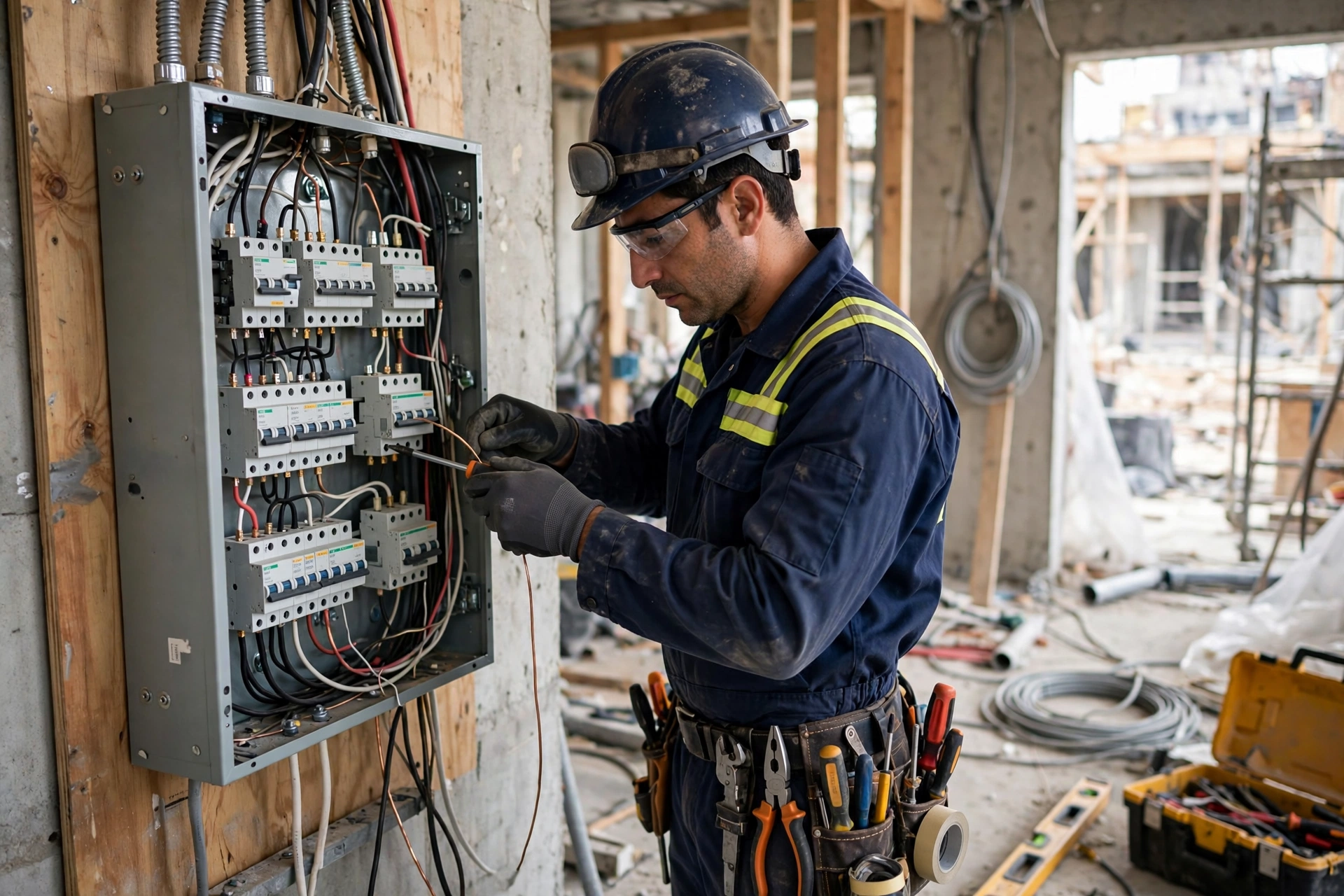
Construction and contracting companies are the third pillar. Contractors, fit-out firms and facility-management groups sponsor everyone from site engineers and foremen to electricians, plumbers, drivers and general helpers. Many of these roles also come with company accommodation and transport, which matters a lot on a starting salary. Skilled tradespeople should look at both UAE construction jobs and specialised trades like electrician openings, where licensed demand stays strong year-round.
Retail and logistics complete the picture. Malls, supermarkets and retail chains sponsor sales staff, cashiers and store supervisors, while the UAE’s giant warehousing and e-commerce sector hires pickers, packers, forklift operators and delivery riders — see current retail vacancies and logistics roles. As a rule of thumb, the larger and more established the employer — hotel groups, hospital chains, big contractors, well-known retail brands — the smoother and more reliable the sponsorship process tends to be.
Free Zone vs Mainland Sponsorship: What Changes for You
You will often see jobs described as “mainland” or “free zone”, and applicants wonder whether the visa is somehow different. In practice, the sponsorship mechanics are nearly identical from your side: the employer still arranges your entry permit, medical test, Emirates ID and residence visa. The difference is which authority issues the paperwork. Mainland companies are licensed by the Department of Economic Development and regulated by MOHRE; free zone companies are licensed by their zone authority — places like JAFZA, DMCC, DIFC or the Sharjah Airport Free Zone — and the zone handles the visa instead of MOHRE.
For you as an employee, the practical effects are small but worth knowing. Your labour protections, end-of-service benefits and mandatory health insurance apply in both systems. Changing jobs works the same way in principle: the new employer cancels the old visa and sponsors a fresh one. One nuance is that some free zone visas historically tied you more closely to working within that zone’s ecosystem, though rules have relaxed considerably. Do not reject a good offer simply because it is free zone — for most Indian hires, a free zone sponsorship is every bit as solid as a mainland one.
The Visit-Visa Strategy Most Indians Use to Get Hired
Here is how a large share of Indian hires actually happen. Instead of applying only from home and waiting, candidates travel to the UAE on a 30, 60 or 90-day visit visa and hunt for jobs in person. Being physically present lets you attend walk-in interviews across the UAE, meet recruiters face to face, and start immediately — which employers love. When you land an offer, your status is converted from visit visa to employment visa without you having to fly back to India, through a legal in-country status change.
This approach works, but go in with your eyes open. Budget realistically for accommodation, food and transport for at least two months, because finding the right sponsored role takes time. Never take up actual work while on a visit visa — that is illegal and can get both you and the employer into serious trouble. And remember the golden rule of the visit-visa hunt: you join a company only after your employment entry permit is issued, not on the basis of a verbal promise. Our guide to UAE jobs for Indians walks through the documents you should carry from home so nothing delays your hiring.
Salary Rules for Bringing Your Family Later
Many applicants choose an offer partly on whether it will eventually let them bring their spouse and children to the UAE. The rule you need to know: to sponsor your family, you generally need a minimum monthly salary of AED 4,000, or AED 3,000 plus employer-provided accommodation. This is a mainland benchmark that most people plan around, and it has real consequences for which offers you accept.
A helper or warehouse role paying AED 1,800 will get you into the country with full sponsorship, but it will not qualify you to bring your family until your salary grows. A nursing or front-office role at AED 5,000-plus clears the bar from day one. There is nothing wrong with starting small — thousands of Indians do exactly that and work their way up — but make the decision consciously. If reuniting with family quickly is your priority, target roles and sectors whose starting salaries sit above the threshold.
Red Flags: How to Spot Fake Visa Sponsorship Offers
Because sponsorship is so valuable, it is also the bait in most Gulf job scams. Learn these warning signs before you apply anywhere. The biggest red flag is money: any “employer” or “agent” who asks you to pay for your visa processing, a job offer letter, a security deposit or “attestation charges” before you join is running a scam. Genuine UAE employers never charge candidates for recruitment or visa costs — the law puts those costs on the company.
Other warning signs include recruiters who operate only through WhatsApp with no company email address or website, offer letters that arrive without any MOHRE-registered job contract, companies you cannot verify through a trade licence or a real office address, and pressure tactics like “pay today or the visa quota expires.” A common trick is a polished-looking offer letter from a real company’s name with a fake HR email — always verify by contacting the company through its official website or phone number, never through the contact details in the suspicious letter itself. When in doubt, slow down: a real sponsored job will still be there after you verify it.
How to Apply the Smart Way, Step by Step
A strong application for a sponsored role follows a clear sequence. First, shortlist only roles you genuinely qualify for — mass-applying to everything burns time and hurts your credibility with recruiters. Second, reshape your CV into the Gulf format: two pages, clear job titles, measurable achievements, and a professional photograph is still common and accepted in the UAE market. Third, apply through official channels — the company’s careers page or the verified listing link — and keep a simple tracker of where you applied and when.
Fourth, get your documents ready before anyone asks: a passport valid for at least six months, passport-size photographs, attested degree certificates for skilled roles, and experience letters from previous employers. Fresh graduates should note that entry-level sponsored roles do exist — our UAE jobs for freshers page tracks them — though licensed professions like nursing will still need their professional eligibility in place. Finally, prepare for video interviews across the IST–GST time difference, and once an offer comes, insist on seeing the MOHRE-registered offer letter before making any travel plans. If Dubai is your target city specifically, the Dubai jobs listings are the fastest way to scan what is open this week.
Frequently Asked Questions
Do I need to pay for my own UAE work visa?
No. Under UAE labour law, the employer pays for your recruitment, work permit and residence visa costs — this is not negotiable and not something a genuine company will ask you to share. You will still bear your personal costs like passport renewal, document attestation in India and your own travel if the employer does not provide tickets, but the visa itself should never come out of your pocket. Anyone asking for visa payment upfront is a scammer.
Can I get a sponsored job while I am still in India?
Yes, and it happens every day, especially in healthcare, hospitality and skilled trades where employers recruit internationally. You interview over video calls, sign the offer, and the company issues your employment entry permit — you fly only after the permit is in hand. That said, being in the UAE on a visit visa and attending interviews in person statistically speeds things up, which is why so many candidates combine online applications with a job-hunting trip.
How long does visa sponsorship take after I accept a job offer?
For a straightforward mainland hire, the typical timeline is two to four weeks from signed MOHRE offer letter to stamped residence visa, assuming your documents are ready and your medical test is clear. Delays usually come from incomplete paperwork — an unattested degree, a passport close to expiry, or pending professional licensing — rather than from the visa process itself. Get your documents attested before you start applying and you will avoid most holdups.
Can I change jobs once my visa is sponsored by an employer?
Yes. Your visa is tied to your employer, not chained to them forever. When you resign properly — serving your notice period and settling dues — your employer cancels your work permit and residence visa, and your new employer sponsors a fresh one. Under current rules you generally get a grace period after cancellation to secure the new visa or leave the country. Just make sure the new company’s offer and entry permit are confirmed before your old visa is cancelled.
Will a sponsored job let me bring my family to the UAE?
It depends on your salary. To sponsor a spouse and children you generally need to earn at least AED 4,000 per month, or AED 3,000 with company-provided accommodation. Entry-level sponsored roles often start below this line, which is fine for getting your foot in the door — many workers bring their families over after a promotion or a job switch lifts them above the threshold. Factor this into which offers you prioritise.
Visa sponsorship is the gateway to everything else about working in the Emirates: the tax-free salary, the career growth, and eventually the chance to build a life there with your family. Focus your search on sectors that sponsor in volume, verify every offer before you commit, and never pay for a job. Check the latest UAE jobs regularly, apply early to roles that match your profile, and treat your documents and licensing as part of the application — not an afterthought.